

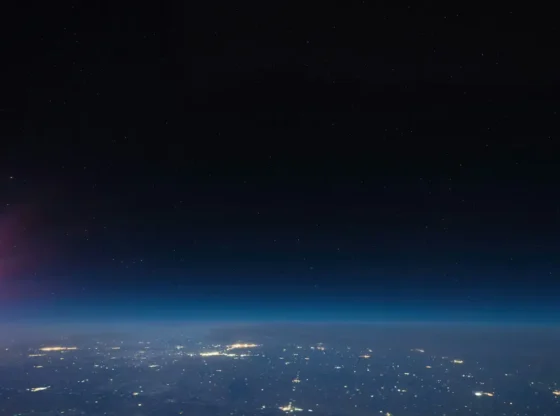

Introduction to Outer Space
When we gaze upward on a clear night, we’re looking into an realm so vast that human minds struggle to comprehend its scale. Outer space represents everything beyond Earth’s atmosphere—a frontier filled with billions of galaxies, each containing billions of stars, surrounded by mysterious dark matter and permeated by fundamental forces we’re only beginning to understand. From the moment early humans first wondered about the lights in the sky to today’s sophisticated telescopes revealing the universe’s deepest secrets, space has captivated our imagination and driven our quest for knowledge.
This comprehensive guide explores the cosmos in all its complexity and beauty. We’ll journey from our local cosmic neighborhood through distant galaxies, examine the life cycles of stars, investigate mysterious black holes, trace the history of space exploration, and contemplate the future of humanity among the stars. Whether you’re a student beginning to explore astronomy, an educator seeking resources, or simply someone who looks up in wonder, this guide provides foundational understanding of the universe we inhabit.
What is Outer Space?
Outer space, often simply called ‘space,’ is the expanse beyond Earth’s atmosphere. There’s no sharp boundary where atmosphere ends and space begins—instead, air gradually thins until it becomes the near-perfect vacuum of space. The Kármán line, 100 kilometers (62 miles) above sea level, is internationally recognized as the boundary where aerodynamic flight becomes impossible and orbital mechanics take over.
Space is characterized by extremely low pressure (essentially a vacuum), the absence of oxygen, extreme temperature variations, and intense radiation unfiltered by protective atmosphere. It’s not completely empty—space contains sparse gas, cosmic dust, electromagnetic radiation, and invisible dark matter. Despite this near-emptiness, space is filled with activity: stars shine, planets orbit, galaxies collide, and fundamental forces shape the cosmos.
The Vastness and Scale of the Cosmos
Understanding space requires grappling with distances so large that familiar units become useless. Astronomers measure cosmic distances in light-years—the distance light travels in one year, approximately 9.46 trillion kilometers or 5.88 trillion miles. The nearest star beyond our Sun, Proxima Centauri, lies 4.24 light-years away. Our Milky Way galaxy spans 100,000 light-years. The observable universe extends roughly 93 billion light-years across.
To grasp these scales, imagine Earth reduced to the size of a marble. The Moon would orbit 12 inches away. The Sun would be 80 feet distant and 30 feet in diameter. Pluto would orbit nearly a half-mile away. Yet the nearest star would still be 4,000 miles distant—roughly the width of the continental United States. This illustrates the incredible emptiness of space even in our stellar neighborhood.
The observable universe contains an estimated 2 trillion galaxies, each with hundreds of billions of stars. If every star were a grain of sand, all Earth’s beaches combined couldn’t hold them. Yet this incomprehensible vastness may represent just a tiny fraction of reality—the part light has had time to reach us since the Big Bang 13.8 billion years ago.
Major Components of Outer Space
The cosmos consists of countless structures and objects, from the largest galaxy clusters to the smallest particles of interstellar dust. Understanding these components reveals how the universe organizes itself across vast scales.
Galaxies: Islands of Stars
Galaxies are massive gravitationally bound systems containing stars, stellar remnants, gas, dust, and dark matter. They represent the universe’s largest clearly defined structures, with masses ranging from millions to trillions of solar masses. The space between galaxies—intergalactic space—is among the emptiest regions in the universe.
Types of Galaxies
Spiral galaxies, like our Milky Way, feature rotating disks with graceful arms spiraling outward from dense central bulges. These arms contain young, hot blue stars, gas clouds, and ongoing star formation. Approximately 60% of nearby galaxies are spirals.
Elliptical galaxies range from nearly spherical to elongated shapes, lacking the organized structure of spirals. They contain predominantly older, redder stars with little gas or dust for new star formation. Ellipticals vary enormously in size—from dwarf ellipticals with millions of stars to massive ellipticals with trillions, often found at galaxy cluster centers.
Irregular galaxies lack defined structure, often resulting from gravitational interactions or collisions with other galaxies. The Magellanic Clouds, visible from the Southern Hemisphere, exemplify small irregular galaxies orbiting the Milky Way.
Our Home Galaxy: The Milky Way
The Milky Way is a barred spiral galaxy containing 200-400 billion stars. Our solar system lies in the Orion Arm, about 27,000 light-years from the galactic center. The galaxy rotates, with our solar system orbiting the center approximately every 225 million years—a cosmic year.
At the Milky Way’s center lies Sagittarius A*, a supermassive black hole with a mass of 4 million suns. Recent images from the Event Horizon Telescope revealed this monster’s shadow, confirming decades of theoretical predictions. The galaxy’s spiral arms, central bar, and surrounding halo of older stars create a majestic structure we’re only now beginning to fully map.
Stars: Cosmic Furnaces
Stars are massive spheres of plasma generating energy through nuclear fusion in their cores. They’re the universe’s fundamental building blocks, creating the heavy elements necessary for planets and life through stellar nucleosynthesis.
Stellar Life Cycles
Stars form when vast clouds of gas and dust collapse under gravity. As material compresses, temperature rises until nuclear fusion ignites—hydrogen atoms fusing into helium, releasing tremendous energy. This fusion pressure balances gravity’s inward pull, creating stable stars that shine for millions to trillions of years depending on mass.
A star’s mass determines its fate. Low-mass stars like red dwarfs burn slowly and steadily for trillions of years. Medium-mass stars like our Sun shine for about 10 billion years before expanding into red giants, eventually shedding outer layers as planetary nebulae, leaving behind dense white dwarf cores. Massive stars live fast and die spectacularly, exploding as supernovae after just millions of years, potentially leaving neutron stars or black holes.
Different Types of Stars
Main sequence stars represent the majority, actively fusing hydrogen in their cores. They range from cool red dwarfs (smallest, most common, longest-lived) through yellow stars like our Sun to hot blue giants (massive, rare, short-lived). Surface temperature determines color—red stars are coolest (around 3,000 K), blue stars hottest (30,000+ K).
Giants and supergiants are evolved stars that have exhausted core hydrogen and expanded enormously. Red giants can swell to sizes engulfing inner planetary orbits. Supergiants like Betelgeuse reach truly enormous proportions—if placed at our Sun’s position, some would extend past Jupiter’s orbit.
White dwarfs are stellar remnants left after medium-mass stars shed their outer layers. Despite containing Sun-like mass, they’re Earth-sized, making them incredibly dense—a teaspoon would weigh tons. They no longer fuse elements but shine from residual heat, gradually cooling over billions of years.
Neutron stars result from massive stars’ supernova deaths when cores collapse to incredible densities—atomic nuclei essentially touching. A neutron star packs 1.4-2 solar masses into a sphere just 20 kilometers across, with densities exceeding atomic nuclei. Rapidly rotating neutron stars called pulsars beam radiation like cosmic lighthouses.
Our Sun
Our Sun is a G-type main sequence star (yellow dwarf) currently middle-aged at 4.6 billion years. It contains 99.86% of the solar system’s mass and generates energy by fusing 600 million tons of hydrogen into helium every second. This process will continue for another 5 billion years before the Sun expands into a red giant, eventually becoming a white dwarf.
The Sun’s structure includes the core (fusion region), radiative zone, convective zone, photosphere (visible surface), chromosphere, and corona (outer atmosphere). Solar wind—charged particles streaming outward—creates Earth’s magnetosphere and causes auroras. Solar activity follows an 11-year cycle affecting space weather and technological systems.
Planets and Moons
Planets are celestial bodies orbiting stars, massive enough for gravity to make them spherical but not massive enough to ignite fusion. Our solar system contains eight planets, countless dwarf planets, and we’ve discovered thousands orbiting other stars.
Terrestrial vs. Gas Giants
Terrestrial (rocky) planets—Mercury, Venus, Earth, Mars—have solid surfaces composed primarily of rock and metal. They formed closer to the Sun where high temperatures prevented gases from condensing. Each displays unique characteristics: Mercury’s extreme temperature swings, Venus’s runaway greenhouse effect, Earth’s life-supporting atmosphere, and Mars’s ancient river valleys suggesting past water.
Gas giants—Jupiter and Saturn—lack solid surfaces, consisting primarily of hydrogen and helium surrounding possible rocky cores. Their massive sizes allowed gravitational capture of primordial nebular gas. Jupiter’s Great Red Spot has raged for centuries; Saturn’s magnificent rings consist of countless ice and rock particles.
Ice giants—Uranus and Neptune—contain more ‘ices’ (water, methane, ammonia) than hydrogen and helium. Uranus rotates on its side, possibly from an ancient collision. Neptune’s winds exceed 1,200 mph, the fastest in the solar system. Both possess ring systems and numerous moons.
The Search for Exoplanets
Since the first confirmed exoplanet discovery in 1995, we’ve identified over 5,500 planets orbiting other stars, with thousands more candidates awaiting confirmation. Detection methods include the transit method (measuring star dimming when planets pass in front) and radial velocity (detecting stellar wobble caused by orbiting planets).
Exoplanets display incredible diversity: hot Jupiters orbiting closer to their stars than Mercury orbits the Sun, super-Earths (larger than Earth but smaller than Neptune), water worlds possibly covered by global oceans, and planets in habitable zones where liquid water could exist. The James Webb Space Telescope now analyzes exoplanet atmospheres, searching for biosignatures indicating life.
Moons: Diverse Worlds
Moons orbit planets rather than stars. Our solar system contains over 200 known moons, ranging from tiny irregular rocks to worlds larger than Mercury. Jupiter’s Galilean moons—Io (volcanic), Europa (subsurface ocean), Ganymede (largest moon in the solar system), and Callisto (ancient cratered surface)—represent diverse environments.
Saturn’s Titan possesses a thick nitrogen atmosphere and lakes of liquid methane. Enceladus erupts geysers of water from a subsurface ocean, making it a prime target in the search for life. Neptune’s Triton orbits backward, suggesting it’s a captured Kuiper Belt object. Earth’s Moon, unusually large relative to its planet, likely formed from debris following a Mars-sized impact early in Earth’s history.
Smaller Celestial Bodies
Beyond planets and moons, countless smaller objects populate the solar system and interstellar space.
Asteroids and the Asteroid Belt
Asteroids are rocky or metallic bodies smaller than planets, primarily concentrated in the Main Asteroid Belt between Mars and Jupiter. This belt contains millions of asteroids ranging from dust grains to Ceres (590 miles diameter, classified as both the largest asteroid and smallest dwarf planet).
Jupiter’s gravity prevented these bodies from coalescing into a planet, instead stirring them into collisions that created smaller fragments. Asteroids are classified by composition: carbonaceous (containing organic compounds and water), silicate (rocky), and metallic (primarily iron and nickel). Some asteroids are exposed cores of proto-planets destroyed by collisions, offering windows into planetary formation.
Comets and the Oort Cloud
Comets are icy bodies that develop spectacular tails when approaching the Sun. Heat vaporizes surface ices, creating a glowing coma (atmosphere) and tail of gas and dust extending millions of miles, always pointing away from the Sun due to solar wind pressure.
Short-period comets originate from the Kuiper Belt beyond Neptune. Long-period comets come from the Oort Cloud, a theoretical sphere of icy bodies extending up to 100,000 astronomical units from the Sun—nearly halfway to the nearest star. The Oort Cloud may contain trillions of comet nuclei, gravitationally bound to the Sun but rarely disturbed into the inner solar system.
Meteoroids, Meteors, and Meteorites
Meteoroids are small particles of rock or metal in space. When entering Earth’s atmosphere, friction creates the glowing streaks called meteors or ‘shooting stars.’ Most burn up completely, but surviving fragments reaching the ground are meteorites. These provide crucial information about solar system formation, as they preserve pristine material from 4.6 billion years ago.
The Interstellar Medium
Space between stars isn’t empty but filled with the interstellar medium—extremely sparse gas (primarily hydrogen and helium) and dust. Though density averages just one atom per cubic centimeter (compared to quadrillions in Earth’s atmosphere), the vast volumes involved mean the interstellar medium contains significant total mass.
This medium provides raw material for new star formation. Dense molecular clouds, hundreds of light-years across, contain regions where gravity overcomes pressure, collapsing into stellar nurseries where hundreds of stars may form simultaneously. The interstellar medium also receives enrichment from dying stars, gradually increasing heavy element abundance over cosmic time.
Dark Matter and Dark Energy: The Universe’s Hidden Components
Ordinary matter—everything we can see and detect—comprises just 5% of the universe’s total content. The remaining 95% consists of mysterious dark matter (27%) and dark energy (68%).
Dark matter doesn’t emit, absorb, or reflect light, making it invisible to telescopes. Its existence is inferred from gravitational effects: galaxies rotate faster than visible matter alone could explain, gravitational lensing shows more mass than we see, and cosmic structure formation requires dark matter’s gravitational scaffolding. Leading candidates include Weakly Interacting Massive Particles (WIMPs), though decades of searches haven’t yet detected them.
Dark energy is even more mysterious—a property of space itself causing the universe’s expansion to accelerate. Discovered through observations of distant supernovae appearing fainter than expected, dark energy opposes gravity on cosmic scales. Its nature remains one of physics’ deepest unsolved problems, with implications for the universe’s ultimate fate.
Exploring Outer Space
Humanity’s relationship with space has evolved from ground-based observations to direct exploration, transforming our understanding of the cosmos.
Early Astronomy: Looking Up from Earth
Ancient civilizations tracked celestial motions, developing calendars and navigation methods. Greek philosophers proposed Earth-centered models of the cosmos. Copernicus (16th century) revived the heliocentric model placing the Sun at the center. Galileo’s 1609 telescopic observations—moons orbiting Jupiter, Venus’s phases, the Moon’s mountains—provided crucial evidence supporting this view.
Kepler discovered that planets follow elliptical orbits, while Newton explained these motions through universal gravitation. The 19th century saw spectroscopy reveal stellar compositions and Doppler shifts indicating cosmic motion. The 20th century brought the shocking realization that our galaxy is just one among billions, and the universe itself is expanding.
The Space Race: Pushing Boundaries
The Space Age began October 4, 1957, when the Soviet Union launched Sputnik 1, humanity’s first artificial satellite. This achievement shocked the United States, triggering the Space Race—a competition for technological supremacy with profound scientific benefits.
Key Milestones and Missions
Yuri Gagarin became the first human in space (April 12, 1961), orbiting Earth once aboard Vostok 1. Alan Shepard followed as the first American in space weeks later. President Kennedy’s 1961 commitment to landing humans on the Moon before decade’s end drove NASA’s Apollo program.
Apollo 11 achieved Kennedy’s goal July 20, 1969, when Neil Armstrong and Buzz Aldrin walked on the lunar surface while Michael Collins orbited above. Five more Apollo missions successfully landed astronauts, returning 842 pounds of lunar samples that revolutionized planetary science. The program demonstrated that humans could survive and work in deep space, though at enormous cost—over $150 billion in current dollars.
Modern Space Exploration
Contemporary space exploration combines international cooperation, robotic missions, and emerging commercial ventures.
International Space Station (ISS)
The ISS, continuously inhabited since November 2000, represents unprecedented international cooperation. This football-field-sized structure orbits 250 miles high, hosting crews from 19 countries conducting research impossible on Earth. Experiments span biology, materials science, fluid physics, and human physiology, while testing technologies needed for future deep-space missions.
The station serves as humanity’s orbital laboratory and testbed for life support systems, closed-loop recycling, and long-duration spaceflight effects. Astronauts have demonstrated humans can live productively in space for over a year—essential knowledge for eventual Mars missions.
Robotic Probes and Rovers
Robotic spacecraft have explored every planet in our solar system and many moons, asteroids, and comets. Mars rovers—Spirit, Opportunity, Curiosity, Perseverance—have revealed Mars as a world once wet and potentially habitable, with Perseverance currently searching for signs of ancient microbial life.
The Voyager probes, launched 1977, continue transmitting data from interstellar space over four decades later. Cassini orbited Saturn for 13 years, revealing Titan’s lakes and Enceladus’s subsurface ocean. New Horizons flew past Pluto in 2015, transforming our understanding of this distant world. Juno currently studies Jupiter’s interior structure and magnetic field.
Space Telescopes
The Hubble Space Telescope, launched 1990, has revolutionized astronomy despite initial mirror flaws (corrected during a 1993 repair mission). Hubble’s images have awed the public while transforming scientific understanding of cosmic expansion, black holes, galaxy formation, and exoplanet atmospheres.
The James Webb Space Telescope, launched December 2021, operates primarily in infrared, peering through cosmic dust to observe the first galaxies formed after the Big Bang, characterize exoplanet atmospheres, and study star and planet formation in unprecedented detail. Early results already challenge theories about early galaxy formation rates.
Private Spaceflight and Commercialization
SpaceX revolutionized launch economics through reusable rockets, dramatically reducing costs and increasing launch frequency. The company carries astronauts to the ISS, deploys thousands of Starlink internet satellites, and develops Starship for eventual Mars missions. Blue Origin focuses on suborbital tourism and lunar landers. These commercial ventures are making space access more routine and affordable.
Technologies Enabling Space Exploration
Space exploration requires overcoming immense challenges: escaping Earth’s gravity, surviving vacuum and radiation, maintaining life support, generating power, communicating across vast distances, and navigating precisely. Solutions include powerful rockets, radiation shielding, solar panels and radioisotope thermoelectric generators, sophisticated telecommunications, and autonomous guidance systems. Each mission pushes technological boundaries, often producing spinoffs benefiting Earth-bound applications.
Phenomena and Mysteries of Outer Space
Space contains phenomena that stretch our understanding of physics and inspire endless fascination.
Black Holes: Cosmic Enigmas
Black holes represent the ultimate victory of gravity—regions where spacetime curvature becomes so extreme that nothing, not even light, can escape beyond the event horizon.
Formation and Types
Stellar-mass black holes (5-50 solar masses) form when massive stars explode as supernovae, leaving cores that collapse beyond neutron star density. Supermassive black holes (millions to billions of solar masses) lurk at galaxy centers, including Sagittarius A* at the Milky Way’s heart. Their formation remains mysterious—perhaps through direct collapse of enormous gas clouds or mergers of smaller black holes.
Intermediate-mass black holes (hundreds to thousands of solar masses) may exist but remain elusive. Primordial black holes, hypothetically formed in the early universe’s extreme conditions, are theoretical candidates for dark matter, though none have been confirmed.
The Event Horizon
The event horizon marks the point of no return—the boundary where escape velocity equals light speed. Anything crossing the event horizon is forever trapped. From outside, infalling objects appear to slow and freeze at the horizon due to extreme time dilation, though from the falling object’s perspective, crossing occurs normally.
Near the event horizon, tidal forces (gravity’s variation with distance) become extreme. An unfortunate astronaut falling feet-first would be stretched vertically and compressed horizontally—spaghettification. Inside the event horizon lies the singularity where spacetime curvature becomes infinite and physics as we know it breaks down.
Nebulae: Stellar Nurseries and Remnants
Nebulae are vast clouds of gas and dust visible as glowing or dark patches against the stellar background. Emission nebulae like the Orion Nebula glow pink from hydrogen excited by nearby hot stars—these are stellar nurseries where new stars form. Reflection nebulae scatter blue light from nearby stars. Dark nebulae are so dense they block background starlight, appearing as dark voids against brighter regions.
Planetary nebulae (despite the name, unrelated to planets) form when dying medium-mass stars shed outer layers, creating expanding shells of glowing gas surrounding hot white dwarf cores. Supernova remnants like the Crab Nebula are expanding debris clouds from stellar explosions, enriching the interstellar medium with heavy elements forged in the supernova.
Supernovae: Cosmic Explosions
Supernovae are among the universe’s most energetic events. When massive stars exhaust nuclear fuel, core collapses trigger explosions that briefly outshine entire galaxies. These explosions scatter heavy elements throughout space—carbon, oxygen, iron, gold—elements essential for planets and life, forged in stellar cores and supernova infernos.
Type Ia supernovae occur when white dwarfs in binary systems accumulate mass from companions until exceeding critical limits, triggering runaway fusion. Their remarkably consistent brightness makes them ‘standard candles’ for measuring cosmic distances—observations of distant Type Ia supernovae revealed the universe’s accelerating expansion, leading to dark energy’s discovery.
Cosmic Microwave Background Radiation
The cosmic microwave background (CMB) is relic radiation from when the universe was 380,000 years old—the oldest light in existence. As the universe expanded and cooled following the Big Bang, it eventually became transparent, allowing photons to travel freely. These photons, stretched by cosmic expansion from visible light to microwaves, fill all space at 2.7 Kelvin.
Tiny temperature fluctuations in the CMB (parts per million) represent density variations that would eventually grow into galaxies and galaxy clusters. Precise CMB measurements by satellites like Planck determine the universe’s age (13.8 billion years), composition, and geometry with remarkable accuracy, providing powerful constraints on cosmological models.
The Search for Extraterrestrial Life
One of humanity’s most profound questions asks: are we alone? The discovery of extremophiles thriving in Earth’s harshest environments—boiling hot springs, frozen Antarctic lakes, deep-sea hydrothermal vents—expanded our concept of habitable environments. If life exists wherever liquid water and energy sources coincide, potentially habitable locations abound.
Europa and Enceladus harbor subsurface oceans beneath icy crusts. Titan possesses lakes of liquid methane. Mars shows evidence of ancient water and possibly habitable conditions. Future missions will search for biosignatures—chemical or physical evidence of life—in these worlds. The discovery of thousands of exoplanets, including Earth-sized worlds in habitable zones, suggests planets are common and potentially habitable environments abundant.
SETI (Search for Extraterrestrial Intelligence) scans radio frequencies for artificial signals from technological civilizations. While no confirmed detections exist, the search continues with increasingly sophisticated instruments. The universe’s vast age and size suggest that if life emerges readily, intelligent civilizations should be common. The Fermi Paradox asks: if aliens are common, where is everybody? Proposed answers range from life being rare to civilizations being short-lived to aliens being present but undetected.
The Future of Space Exploration
The next decades promise revolutionary advances in space exploration and utilization.
Manned Missions to Mars and Beyond
NASA’s Artemis program aims to return humans to the Moon by the mid-2020s, establishing sustainable presence as a proving ground for Mars technologies. The Moon offers resources like water ice in permanently shadowed craters, valuable for life support and propellant production.
Mars represents the ultimate near-term goal. Current plans envision crewed missions in the 2030s or 2040s, though challenges are immense: 6-9 month transit times, radiation exposure, psychological effects of isolation, landing systems for heavy payloads, and returning crew safely. Technologies under development include nuclear propulsion, in-situ resource utilization (producing fuel and oxygen from Martian atmosphere and water), and advanced life support systems.
Space Tourism and Colonization
Commercial spaceflight is transitioning space tourism from fantasy to reality. SpaceX, Blue Origin, and Virgin Galactic offer suborbital and orbital flights to paying customers. While currently expensive (hundreds of thousands to tens of millions per seat), costs will likely decrease as operations mature.
Long-term colonization proposals envision permanent settlements on the Moon or Mars. Challenges include radiation protection, food production, maintaining breathable atmospheres, and psychological health in isolated, confined environments. Proponents argue that becoming multiplanetary increases humanity’s long-term survival prospects, while critics question priorities given Earth’s pressing problems.
Asteroid Mining and Resource Utilization
Some asteroids contain valuable metals—iron, nickel, platinum-group elements—in concentrations far exceeding terrestrial ores. Water-rich asteroids could provide propellant for deep-space missions. While asteroid mining remains theoretical, several companies are developing technologies for prospecting and extraction. Initial applications will likely support space-based industry rather than returning materials to Earth, given launch costs.
Next-Generation Telescopes and Discoveries
Upcoming observatories promise revolutionary capabilities. The Nancy Grace Roman Space Telescope will survey vast cosmic volumes, studying dark energy and discovering thousands of exoplanets. Extremely Large Telescopes with mirrors exceeding 30 meters will directly image Earth-like exoplanets and study the universe’s first stars. The Square Kilometre Array radio telescope will map cosmic hydrogen, probe cosmic dawn, and possibly detect technosignatures from alien civilizations.
These instruments will address fundamental questions: How common are habitable worlds? What is dark energy’s nature? How did the first stars and galaxies form? Are we alone? Each answer will likely generate new questions, continuing humanity’s quest to understand the cosmos.
Conclusion
The Enduring Fascination with Space
Space exploration represents humanity at its best—curiosity, ingenuity, and courage driving us beyond comfortable boundaries to expand knowledge and capability. From ancient astronomers tracking celestial motions to modern spacecraft visiting distant worlds, our relationship with space reflects our drive to understand nature and our place within it.
The universe revealed by modern astronomy is far stranger and more magnificent than our ancestors imagined: galaxies rushing apart in accelerating expansion, black holes where spacetime curves infinitely, the possibility of infinite parallel universes, and perhaps countless worlds harboring life. Each discovery simultaneously answers old questions and poses new ones, ensuring the cosmic frontier remains forever compelling.
Our Place in the Cosmos
We inhabit a universe 13.8 billion years old, containing trillions of galaxies in an observable sphere 93 billion light-years across. Earth orbits an ordinary star in a typical spiral galaxy, one planet among trillions. This cosmic perspective can feel humbling, even unsettling.
Yet this same perspective reveals something profound: we are the universe aware of itself. The atoms composing our bodies were forged in stars that lived and died before the Sun formed. We are literally made of stardust, and through us, the cosmos contemplates its own existence.
As we continue exploring space—sending robots to distant worlds, building telescopes of unprecedented power, and perhaps one day becoming a multiplanetary species—we write the next chapter in the universe’s story. The wonders of outer space await our discovery, limited only by imagination and determination. The cosmos beckons, and humanity, in our finest moments, answers that call.
Frequently Asked Questions
How big is outer space and does it have an end?
The observable universe—the part from which light has had time to reach us since the Big Bang—extends approximately 93 billion light-years in diameter. However, this represents only the portion we can observe, not necessarily the universe’s total size. The universe may be infinite, extending forever beyond the observable horizon. Alternatively, it might be finite but unbounded, like Earth’s surface which is finite yet has no edge—if you travel far enough in one direction, you eventually return to your starting point. Current evidence suggests the universe is very close to spatially flat, which could indicate infinite extent, though we cannot be certain what lies beyond the observable limit.
Can humans breathe in outer space without a spacesuit?
No, humans cannot survive unprotected in outer space. The vacuum environment causes multiple immediate life-threatening effects. Without pressure, bodily fluids would vaporize (though you wouldn’t explode as sometimes depicted in movies—skin provides enough containment). Oxygen would leave your bloodstream within 15 seconds, causing unconsciousness. Exposure to unfiltered solar radiation would cause severe burns. Temperature extremes—hundreds of degrees above or below zero depending on sun exposure—would cause rapid tissue damage. A spacesuit provides pressure, oxygen, thermal regulation, and radiation protection necessary for survival.
What is the temperature in outer space?
Temperature in space varies dramatically. Far from any star, the cosmic microwave background radiation maintains space at approximately 2.7 Kelvin (-270°C or -454°F)—just above absolute zero. However, objects in sunlight can reach hundreds of degrees above zero, while shaded surfaces drop to extreme cold. The Moon’s surface temperature ranges from 127°C (260°F) in direct sunlight to -173°C (-280°F) in shadow. The International Space Station experiences similar extremes, requiring sophisticated thermal control systems. Temperature is actually a complex concept in space’s near-vacuum, as there are few molecules to transfer heat through conduction or convection—heat transfer occurs primarily through radiation.
Are there sounds in outer space?
Sound cannot travel through outer space’s vacuum because sound requires a medium (air, water, solid material) to propagate as pressure waves. With essentially no molecules in space to vibrate and transmit pressure variations, there are no sounds as we experience them on Earth. However, electromagnetic waves (radio waves, light) travel perfectly fine through vacuum, and some can be converted to audible frequencies. Scientists often convert electromagnetic data from space into sound to help analyze patterns. Within spacecraft or spacesuits, air pressure allows sound transmission normally, so astronauts can speak to each other. But in open space between planets or stars, perfect silence reigns.
What is the difference between an asteroid, a comet, and a meteoroid?
These three types of small solar system bodies differ in composition and behavior. Asteroids are primarily rocky or metallic objects, concentrated in the Main Asteroid Belt between Mars and Jupiter. They range from dust-grain size to Ceres at 590 miles diameter. Comets are icy bodies that develop tails when approaching the Sun—heat vaporizes surface ices, creating glowing atmospheres (coma) and tails of gas and dust that always point away from the Sun. Most comets originate from the Kuiper Belt or distant Oort Cloud. Meteoroids are small particles of rock or metal in space, typically fragments from asteroids or comets. When a meteoroid enters Earth’s atmosphere, friction creates a glowing streak called a meteor. If it survives to reach the ground, it’s called a meteorite. In summary: asteroids are rocky bodies in space, comets are icy and develop tails, and meteoroids are small particles that become meteors when entering atmospheres and meteorites if they land.