


Introduction: The Power of a Name in Space
From the moment humanity first dreamed of leaving Earth, we’ve given names to our celestial vessels—names that inspire, commemorate, and capture the imagination. A spacecraft names list reveals more than mere identifiers; it tells the story of human ambition, from NASA spacecraft names honoring mythological gods to Star Wars ship names that defined science fiction culture. Whether you’re seeking cool spaceship names for a novel, exploring famous spacecraft in history, or learning how to name a spacecraft of your own design, understanding naming conventions reveals the poetry and purpose behind these iconic vessels.
The best spaceship names resonate across generations. Apollo evokes ancient mythology and moonwalking astronauts. Enterprise conjures both naval tradition and Star Trek’s exploration ethos. Millennium Falcon suggests both speed and adventure. These names work because they balance memorability with meaning, sound with significance. This comprehensive guide explores real spacecraft names from NASA and international space agencies, fictional spacecraft names from beloved sci-fi universes, and practical advice for creating unique spacecraft names that will stand the test of time.
Real Spacecraft Names: A Legacy of Exploration
Real spacecraft names carry the weight of history, representing humanity’s actual journey into the cosmos. From the earliest rockets to future spacecraft names being selected today, these vessels embody our technological achievements and exploratory spirit.
Manned Spacecraft and Programs
The most famous spacecraft in history often carried humans beyond Earth’s atmosphere. Space shuttle names like Enterprise, Columbia, Challenger, Discovery, Atlantis, and Endeavour honored naval vessels and space exploration itself. Enterprise, named after Star Trek’s iconic ship following a fan campaign, never flew to space but served as a crucial test vehicle.
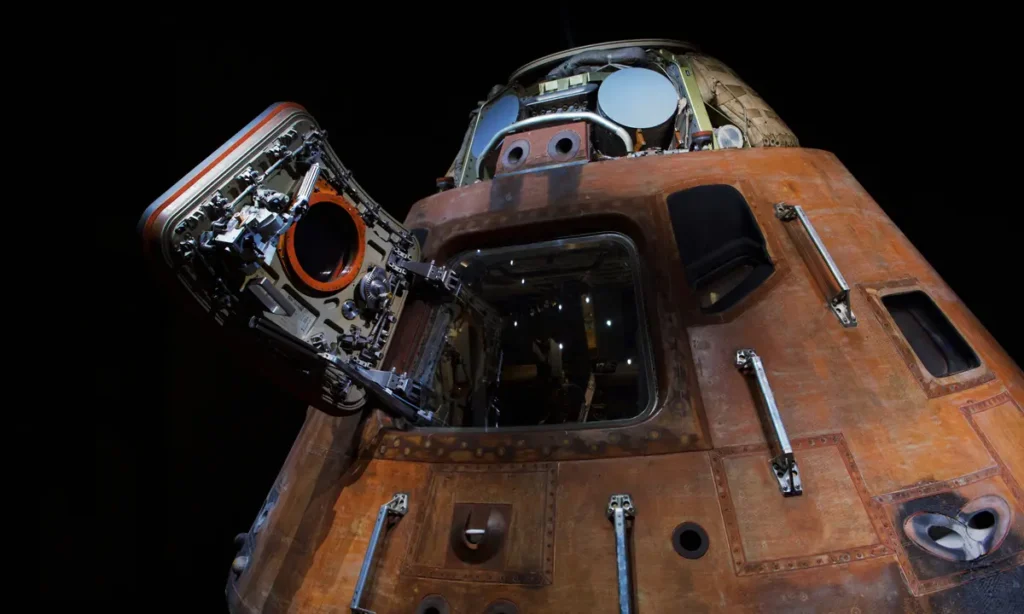
Apollo Command Modules bore names chosen by their crews: Columbia (Apollo 11), Odyssey (Apollo 13), Endeavour (Apollo 15), and Challenger (Apollo 17) reflected exploration themes. The Lunar Modules—Eagle, Intrepid, Antares, Falcon, and others—often referenced birds or discovery. These exploration vessel names captured each mission’s pioneering spirit.
The Soyuz and Vostok capsules, Russia’s workhorses, use numerical designations but carry profound legacy. Vostok 1 carried Yuri Gagarin, the first human in space. The International Space Station (ISS), humanity’s orbital outpost, represents collaborative exploration rather than national achievement. NASA’s Orion capsule, named for the constellation and mythological hunter, represents future crewed missions to the Moon and Mars.
Robotic Probes and Orbiters: NASA Spacecraft Names
NASA spacecraft names for robotic missions often invoke mythology, scientific legacy, or exploratory themes. The Voyager Program launched two probes—Voyager 1 and Voyager 2—in 1977. These exploration vessel names proved prophetic; both spacecraft continue transmitting data from interstellar space over four decades later, true voyagers in the cosmic ocean.
Pioneer 10 and Pioneer 11 blazed trails to the outer solar system, their names perfectly capturing their role as humanity’s first emissaries to Jupiter and Saturn. Mars rovers received names through public contests, resulting in uniquely evocative choices: Spirit and Opportunity (twin rovers that far exceeded their planned 90-day missions), Curiosity (the car-sized rover exploring Gale Crater), and Perseverance (currently searching for ancient microbial life).
Hubble Space Telescope revolutionized astronomy, named for Edwin Hubble who discovered the universe’s expansion. The James Webb Space Telescope (JWST) honors NASA’s second administrator who championed the Apollo program. Other notable probes include Cassini-Huygens (exploring Saturn, named for astronomers who discovered its rings and largest moon), Galileo (Jupiter orbiter), New Horizons (Pluto flyby), Juno (studying Jupiter’s composition), and Parker Solar Probe (touching the Sun’s atmosphere).
Launch Vehicles and Rockets
Launch vehicles often receive designation-heavy names, though some achieve iconic status. Saturn V, the massive rocket that launched Apollo missions, took its name from the planet Saturn (one step beyond Jupiter rockets that preceded it). SpaceX’s Falcon 9 and Falcon Heavy reference the Millennium Falcon, with founder Elon Musk being a Star Wars fan.
United Launch Alliance operates Atlas and Delta rockets, names invoking strength and Greek letters respectively. Europe’s Ariane rockets honor Ariadne from Greek mythology. China’s Long March series references the historic Communist march. Rocket Lab’s Electron serves small satellite markets. These names balance technical designation with memorable branding.
Naming Conventions in Real Space Exploration
Understanding spaceship naming conventions reveals the thought processes behind real spacecraft names and provides templates for creating future spacecraft names.
Homages and Mythological References
Greek and Roman mythology provides rich material for spacecraft names. Apollo honored the god of light and music—an optimistic choice for Moon missions. Artemis, Apollo’s twin sister and goddess of the Moon, names NASA’s current lunar program. Orion, the hunter constellation, suits a deep-space capsule. Juno investigates Jupiter, named for the king of gods. Mercury, Gemini, and Atlas all drew from mythology.
This spaceship naming convention creates gravitas and timelessness. Mythology provides hundreds of options: gods, heroes, titans, and constellations offer names that sound majestic while avoiding trademark conflicts. When considering how to name a spacecraft for fiction or proposals, mythological references provide instant recognition and thematic depth.
Scientific Designations and Serial Numbers
Many spacecraft carry alphanumeric designations: STS-1 (Space Transportation System mission 1, the first Space Shuttle flight), SM-2000 (Soyuz modification), or GPS IIF-12 (Global Positioning System satellite). These technical names provide clear categorization but lack inspirational quality. They serve administrative purposes while memorable names capture public imagination.
The best spaceship names often combine designation with nickname. The Lunar Module from Apollo 11 was officially LM-5 but universally known as Eagle. This dual-naming satisfies both bureaucratic requirements and human need for meaningful names.
Public Contests and Collaborative Naming
NASA increasingly involves the public in naming spacecraft. Mars rovers Spirit, Opportunity, and Curiosity emerged from student essay contests. This approach generates unique spacecraft names while fostering public engagement. Perseverance won from 28,000 student submissions. Such contests tap into collective creativity, often yielding better names than committee decisions.
British scientists ran a poll to name a research vessel, which the internet overwhelmingly voted to call ‘Boaty McBoatface.’ While that name went to a submarine instead (the ship became RRS Sir David Attenborough), the incident illustrates both the power and peril of public naming. The best approach combines public input with curatorial oversight.
Fictional Spacecraft Names: Exploring Imagined Universes
Fictional spacecraft names often achieve greater cultural resonance than real ones, defining entire genres and inspiring real space programs. These sci-fi spaceship names demonstrate creative naming at its finest.
Star Wars Universe: Iconic Star Wars Ship Names
Star Wars ship names epitomize cool spaceship names. The Millennium Falcon instantly evokes speed (‘made the Kessel Run in less than twelve parsecs’), scruffy charm, and roguish adventure. The name combines temporal grandeur (Millennium) with predatory grace (Falcon)—a ship that’s both ancient and swift.
Imperial Star Destroyers project menace through their name alone—’Star’ suggests cosmic scale while ‘Destroyer’ promises military might. The Executor, Darth Vader’s flagship, conveys harsh judgment. Smaller craft like X-wings, Y-wings, and TIE fighters use descriptive designations based on appearance. The Ghost (from Rebels) and Slave I (Boba Fett’s ship) reflect their owners’ roles.
Star Wars demonstrates how fictional spacecraft names can range from poetic (Millennium Falcon) to functional (X-wing) to menacing (Executor) while maintaining internal consistency. The best spaceship names in this universe balance memorability with meaning.
Star Trek Universe: Military Precision
Star Trek established spaceship naming conventions that influenced decades of sci-fi. The USS Enterprise (NCC-1701 and variants) honors the aircraft carrier USS Enterprise CV-6, the most decorated U.S. warship of World War II. The ‘USS’ prefix (United Starship or United Space Ship) evokes naval tradition, while ‘NCC’ provides registry designation.
Different species have distinct naming styles. Klingon Birds-of-Prey emphasize aggression. Romulan Warbirds sound predatory. The Borg’s geometric designations (Borg Cubes) reflect their collectivist, efficiency-focused culture. USS Voyager and Deep Space 9 descriptively name their roles—one voyages through unknown space, the other occupies a fixed strategic location.
These exploration vessel names demonstrate how consistent naming conventions create believable fictional universes. When learning how to name a spacecraft for your own fiction, consider what naming patterns reveal about the society that builds them.
Other Iconic Sci-Fi Ships
Serenity (Firefly) perfectly captures the ship’s role as peaceful refuge in a chaotic ‘verse. The name contrasts ironically with the crew’s frequent combat. Nostromo (Alien) borrowed its name from a Joseph Conrad novel, adding literary weight to a blue-collar freighter. Discovery One (2001: A Space Odyssey) sounds clinical and exploratory, fitting the film’s cerebral tone.
The Rocinante (The Expanse) references Don Quixote’s horse, suggesting both noble questing and perhaps quixotic foolishness—apt for a stolen warship renamed by idealistic rebels. Mass Effect’s Normandy SR-1 and SR-2 honor the D-Day invasion, while military designation SR (Systems Alliance Space Vehicle) grounds sci-fi in naval tradition.
Event Horizon’s ominous name foreshadows the ship’s journey to hell. Red Dwarf ironically names a mining ship after the dying star type, suiting the show’s comedic tone. Heart of Gold (Hitchhiker’s Guide) sounds impossibly valuable for a ship powered by Infinite Improbability. These unique spacecraft names demonstrate how names can establish tone, foreshadow plot, or provide ironic contrast.
Common Tropes and Styles in Fictional Naming
Analyzing fictional spacecraft names reveals patterns that create compelling, believable cool spaceship names.
Military Designations and Prefixes
Military sci-fi spaceship naming conventions often use prefixes: USS (Star Trek), UNSC (Halo), HMS (various), or SS. These immediately communicate governmental or organizational authority. They ground fantastic vessels in familiar naval tradition, making alien concepts more accessible.
The best spaceship names in military sci-fi balance official designation with memorable identity. UNSC Pillar of Autumn (Halo) pairs bureaucratic prefix with evocative seasonal imagery. This combination satisfies both world-building needs (showing organizational structure) and narrative needs (creating memorable identity).
Abstract and Philosophical Names
Many cool spaceship names invoke virtues, concepts, or philosophical ideas. Endurance (Interstellar) captures the mission’s core challenge. Serenity expresses desired state. Destiny, Hope, Endeavour, Resolve—these exploration vessel names express human aspirations made manifest in metal and energy.
Such names work because they’re simultaneously simple and profound. They’re easy to remember and pronounce while carrying thematic weight. When considering how to name a spacecraft, abstract virtues provide emotional resonance without complex backstory.
Evocative and Descriptive Names
Some fictional spacecraft names directly describe appearance or function. Star Destroyer tells you exactly what it does. Battlestar Galactica combines military type (battlestar) with mythological grandeur (Galactica). Death Star achieves ultimate directness—it’s a star-sized weapon that brings death.
This approach trades subtlety for immediate understanding. New audiences instantly grasp what these vessels are and do. The best descriptive names combine clarity with poetry: Normandy suggests military legacy, while ‘normandy’ sounds strong and noble.
Humorous or Quirky Names
Comedy sci-fi employs unique spacecraft names for laughs. Heart of Gold (powered by Infinite Improbability) sounds absurdly valuable. Planet Express Ship (Futurama) is literally named for the delivery company it serves—bland corporate naming in a fantastic setting. These names create humor through bathetic contrast—treating extraordinary vessels with mundane or silly designation.
How to Name Your Own Spacecraft: Tips for Aspiring Creators
Whether designing spacecraft for novels, games, or personal projects, understanding spaceship naming conventions helps create unique spacecraft names that resonate. Here’s how to name a spacecraft effectively.
Brainstorming Themes and Concepts
Start with theme. Mythology and astronomy provide rich vocabularies: gods (Athena, Thor, Ra), constellations (Cassiopeia, Andromeda, Draco), stars (Rigel, Vega, Sirius), planets, galaxies (Andromeda, Whirlpool), and nebulae. These cool spaceship names carry inherent majesty.
Virtues and ideals offer abstract resonance: Hope, Courage, Wisdom, Justice, Harmony, Valor, Truth, Liberty. These future spacecraft names work across settings and cultures. Scientific terms provide technical authenticity: Quantum, Nebula, Pulsar, Gravity, Cosmos, Helix, Photon. These sci-fi spaceship names sound appropriately futuristic.
Famous explorers, scientists, and visionaries provide historical weight: Magellan, Shackleton, Da Vinci, Curie, Einstein, Hawking. Nature and earthly phenomena yield evocative options: Storm, River, Mountain, Phoenix, Serpent, Aurora, Thunder. Cultural and linguistic inspiration draws from world languages—Latin, Greek, Sanskrit, Old Norse, Japanese, Arabic all provide beautiful words with deep meanings.
Structural Elements and Affixes
Common prefixes establish immediate context for your spacecraft names list: ISS (International Space Station), SS (Star Ship), UNSC (United Nations Space Command), NCC (Naval Construction Contract), HMS (Her Majesty’s Ship), USF (United Space Force). These prefixes ground fantastic names in organizational reality.
Suffixes provide classification: -class (Sovereign-class), -series (Mark V-series), -line, -fleet. Numerical and alphanumeric designations add technical authenticity: NCC-1701-D, Soyuz MS-20, Model X-303. The best spaceship names often combine memorable name with technical designation: USS Enterprise NCC-1701, UNSC Pillar of Autumn.
Considerations for a Memorable Name
Sound, pronunciation, and flow matter enormously. Cool spaceship names roll off the tongue. Millennium Falcon has rhythmic quality—four syllables, two syllables. Enterprise has gravitas. Serenity sounds peaceful. Test names aloud. Avoid tongue-twisters or awkward consonant clusters.
Uniqueness and availability prevent confusion. Check that your spacecraft names aren’t already famous—accidentally naming your ship ‘Enterprise’ will forever invoke Star Trek comparisons. Google your proposed names. Unique spacecraft names stand out in crowded markets.
Symbolism, lore integration, and backstory add depth. The best spaceship names reward attention—Rocinante references literature, Serenity reflects captain’s psychology, Nostromo honors Conrad. Names that connect to broader narrative create richer world-building.
Avoid pitfalls: overly complex names (Kxyzxtlypqonxyz) frustrate readers. Clichés (Starhawk, Spacewolf) feel generic. Hard-to-pronounce names (arbitrary consonant strings) alienate audiences. Easily-mistaken names create confusion. When assembling your fictional spacecraft names, prioritize clarity and memorability over cleverness.
Naming Tools and Resources
Online name generators provide starting points. Fantasy name generators, sci-fi name generators, and ship name generators offer thousands of combinations. Use these for inspiration, not final choices—generated names often lack meaningful connection to your story.
Thesauruses and dictionaries help find synonyms and related concepts. Looking up ‘explorer’ yields voyager, pathfinder, pioneer, adventurer, wanderer—each with different connotations. Etymology dictionaries reveal word origins, helping create names with hidden meanings.
Brainstorming with others generates unexpected options. Writers’ groups, gaming communities, and friends provide fresh perspectives. Collaborative naming often yields better results than solitary invention.
Future Spacecraft Names: What’s Coming
Real space programs continue developing, requiring future spacecraft names. NASA’s Artemis program will send spacecraft to establish lunar bases. The Gateway lunar station needs module names. Mars missions will require numerous vessels. Commercial space stations from Axiom Space, Blue Origin, and others await naming.
China’s space program employs celestial naming—Tianwen (Heavenly Questions) for Mars missions, Tiangong (Heavenly Palace) for their space station. These exploration vessel names reflect cultural heritage while expressing cosmic ambition. India’s Chandrayaan (Moon Craft) and Mangalyaan (Mars Craft) use Sanskrit terms.
Private spacecraft will increasingly need memorable names. SpaceX’s Starship represents the vehicle type but specific ships will need individual names. Blue Origin’s New Glenn and New Armstrong honor astronauts. Virgin Galactic’s spacecraft carry names like VSS Unity and VSS Imagine. As space commercializes, NASA spacecraft names will share the cosmic stage with corporate branding.
Conclusion: The Enduring Legacy of Spacecraft Names
Whether examining a spacecraft names list of real vessels, analyzing Star Wars ship names, or creating unique spacecraft names for fiction, we engage with humanity’s relationship to the cosmos. Names matter because they transform metal and circuits into characters, mission designations into legends. The best spaceship names transcend their origins—Enterprise means more than one ship, Apollo represents more than one program.
Famous spacecraft in history carry their names into the future. Children born decades after the last Space Shuttle flight still know Discovery and Endeavour. Voyager’s golden records drift through interstellar space carrying humanity’s introduction to potential alien civilizations—the spacecraft’s name literally voyaging to the stars. The Millennium Falcon has never left fictional space but remains more recognizable than most real spacecraft.
Learning how to name a spacecraft—whether for NASA proposals, novel manuscripts, game development, or imaginative play—connects us to this legacy. Spaceship naming conventions evolved from naval tradition, mythology, and cultural heritage provide templates. Yet the most memorable names transcend convention: they capture imagination, suggest possibility, and inspire dreams of cosmic exploration.
As humanity expands into the solar system and beyond, we’ll need thousands of new names for exploration vessel names, orbital platforms, and interplanetary transports. Some will be NASA spacecraft names honoring scientific heritage. Others will be fictional spacecraft names inspiring future generations. All will join the growing spacecraft names list that charts humanity’s journey from Earth-bound dreamers to spacefaring civilization.
The cool spaceship names we create today become the famous spacecraft in history tomorrow. Whether your ship explores fictional universes or prepares for real missions, give it a name worthy of the stars it seeks. After all, a ship without a good name is just transportation. A ship with the right name becomes a legend.
Frequently Asked Questions
How are real spacecraft typically named?
Real spacecraft names follow several conventions depending on the space agency and mission type. NASA spacecraft names often honor mythology (Apollo, Artemis), historical explorers (Magellan, Columbus module), or scientific pioneers (Hubble, James Webb). Many Russian spacecraft use numerical designations (Soyuz, Vostok) with mission numbers. European Space Agency craft reference mythology (Ariane) or scientists (Herschel, Planck).
Manned spacecraft are frequently named by their crews (Apollo Command and Lunar Modules) or through space shuttle names that honored naval vessels and concepts (Enterprise, Endeavour). Robotic spacecraft increasingly receive names through public contests, yielding Spirit, Opportunity, Curiosity, and Perseverance for Mars rovers. Chinese and Indian programs use their languages—Tianwen, Tiangong, Chandrayaan—reflecting cultural heritage.
What are some of the most iconic fictional spacecraft names in pop culture?
The most iconic fictional spacecraft names include the Millennium Falcon and USS Enterprise, both achieving universal recognition even among non-fans. Other famous sci-fi spaceship names include Serenity (Firefly), Nostromo (Alien), Discovery One (2001: A Space Odyssey), Heart of Gold (Hitchhiker’s Guide), Battlestar Galactica, the TARDIS (Doctor Who), and the Rocinante (The Expanse).
Star Wars ship names dominate pop culture: Star Destroyers, X-wings, TIE fighters, and Slave I all instantly evoke the franchise. Star Trek’s various USS Enterprise iterations (NCC-1701, 1701-D), USS Voyager, and Deep Space 9 defined exploration vessel names for generations. These best spaceship names work because they balance memorability with meaning—Millennium Falcon suggests both speed and elegance, Enterprise evokes exploration and naval tradition.
Can I use a name generator for spacecraft names?
Yes, online name generators can provide excellent starting points when creating unique spacecraft names. Fantasy name generators, sci-fi ship name generators, and specialized spacecraft name generators offer thousands of combinations mixing prefixes, root words, and suffixes following spaceship naming conventions. However, generated names should be refined rather than used directly.
The best approach combines generator output with personal creativity. Use generators to spark ideas, then customize results to fit your specific universe, culture, or narrative needs. Check generated names for existing use—Google search prevents accidentally duplicating famous spacecraft. For published fiction or games, ensure names aren’t trademarked. Generators work best when you understand how to name a spacecraft effectively, using them as brainstorming tools rather than final solutions.
What kind of themes are good for naming a fictional spaceship?
The best spaceship names draw from several reliable theme categories. Mythology and astronomy provide rich material: Greek/Roman gods, constellations, stars, planets, and astronomical phenomena yield cool spaceship names like Orion, Cassiopeia, or Nebula. Virtues and ideals create resonant names: Honor, Courage, Justice, Hope, or Endurance express human aspirations.
Nature themes offer evocative options: Storm, Phoenix, Serpent, Mountain, River all suggest power and movement. Historical explorers and scientists provide gravitas: Magellan, Shackleton, Da Vinci, Curie, Einstein honor human achievement. Scientific terms create authenticity: Quantum, Helix, Photon, Pulsar sound appropriately futuristic. Cultural/linguistic sources—Latin, Greek, Sanskrit, Norse, Japanese—provide beautiful words with deep meanings that become unique spacecraft names with proper context.
Do all real spacecraft have official prefixes or designations?
Not all real spacecraft names include prefixes, though many do. Space shuttle names (Enterprise, Challenger, Columbia, Discovery, Atlantis, Endeavour) had no prefix—just the vehicle name. Similarly, Apollo Command and Lunar Modules used plain names like Eagle, Columbia, or Odyssey. Mars rovers (Spirit, Opportunity, Curiosity, Perseverance) carry no prefix.
However, many spacecraft include designation systems. Russian craft use type names: Soyuz MS-20, Vostok 1. NASA spacecraft names for probes often include program designation: Voyager 1, Pioneer 10. The International Space Station (ISS) uses its acronym. Military spacecraft use classifications: GPS IIF-12, DMSP-5D. These spaceship naming conventions provide organizational clarity while potentially sacrificing memorability. The most famous spacecraft in history often have simple names without complex designation systems.
What’s the difference between a probe, an orbiter, and a lander in terms of naming?
Probes, orbiters, and landers represent different mission types, sometimes reflected in their names though not always. Probes are spacecraft that pass by or through their targets without entering orbit—Voyager 1 and 2, Pioneer 10 and 11, and New Horizons are probes. Their names often emphasize journey or exploration: Voyager, Pioneer, Horizons.
Orbiters enter orbit around celestial bodies to conduct extended observations. Examples include Mars Reconnaissance Orbiter (descriptively named), Cassini (orbited Saturn, named for an astronomer), and Lunar Reconnaissance Orbiter. Landers descend to surfaces: Mars landers Spirit, Opportunity, Curiosity, and Perseverance all have inspirational names. The Apollo Lunar Modules (Eagle, Intrepid, Falcon) served as landers.
Some missions combine types: Mars Science Laboratory included Curiosity rover (landed), while Mars Odyssey orbits. Cassini-Huygens combined an orbiter (Cassini) with a lander (Huygens) that descended to Titan. Naming doesn’t always explicitly indicate mission type—context determines whether Enterprise refers to an orbiter, lander, or other spacecraft type. This flexibility allows cool spaceship names to work across mission profiles.